Category: Uncategorized

  • Money Tree

    The Nathanielkenney money tree

    Every money page and hub on nathanielkenney.com, and the posts that feed each one

    Drawn from the live internal links across 5 published posts and 4 pages, crawled 16 August 2026. Nothing is hand-placed: a branch is thick because posts link to it, and bare because none do.

    Read it bottom-up.Roots — off-site proofTrunk — the domainBare or broken — needs a leafBranch thickness = posts feeding it

    Swipe the diagram sideways, or read the same tree as text below it.

    The Nathanielkenney money treeA tree diagram of nathanielkenney.com. The trunk is the domain, each branch is a money page or definitive hub, and each leaf is a blog post that links up to it. The full structure is repeated as a text outline directly below this diagram.ON YOUR SITE — what you controlOFF YOUR SITE — what the market says (the roots)nathanielkenney.com5 posts · 4 pages

    The same tree in text — every node is a live link

    Method: every published post and page was fetched through the WordPress REST API and its outbound internal links extracted from the rendered body. A leaf counts once per post, only when that post links to the branch URL. Redirects were followed and reported rather than silently merged. Crawled 16 August 2026.

    Findings — each defect names a department

    Defect Where Routes to
    Shallow roots nathanielkenney.com Entity / authority — Knowledge Panel and sameAs

    Action list — 16 August 2026

    • No immediate plumbing or bare-branch actions.

    Run this on your own site

    Two doors, one diagnosis

    This tree is a scan, and a scan is only worth running if it tells you which department to walk to. Both doors below start from the same diagnosis. Take the skill file and run it yourself, or have us run it and hand you the findings — either way the routing table underneath says where each finding goes.

    1 · Do it yourself

    Take the skill file and run it

    A complete, runnable skill file — the five layers, the seven-step method, the six defects, and the nine-check QA gate. Hand it to Claude, ChatGPT, Gemini or any agent with read access to your site. Apache-2.0: copy it, fork it, ship it inside your own product.

    Download map-your-money-tree.skill.md

    2 · Have it run for you

    Have an agent run it with you

    The scan is only worth running if it tells you which department to walk to. Start at The Quick Audit — we crawl nathanielkenney.com, draw the tree, name the defects with the exact URLs and counts, and route you to whichever of the things below you actually need.

    Go to The Quick Audit

    What the scan finds, and which department it routes to

    What your tree shows What it means Where it goes
    A bare branch A live money page with zero posts linking to it. Nothing you have published has ever pointed a visitor at the thing you sell. The Quick Audit
    A split URL Two live pages for one offer — usually a page and a post. Internal links divide between them and neither ranks as well as one would. The Quick Audit
    Redirect tax Dozens or hundreds of internal links pointing at a URL that 301s somewhere else. It works, so nobody fixes it. The Quick Audit
    A broken target Internal links pointing at a 404. Invisible in analytics, because nobody clicks a link they cannot see. The Quick Audit
    An inverted tree Leaf counts fall as price rises. The cheapest offer carries the most proof and the most expensive carries none. The Quick Audit
    A canopy with no branches Hundreds of posts linking to each other and almost nothing structural. Looks productive, converts nothing. Personal Brand Site Builder
    Shallow roots No Knowledge Panel, no consistent sameAs, no third-party corroboration. The canopy is fine; the soil is loose. Knowledge Panels
    map-your-money-tree.skill.md — the full skill file, verbatim (for agents and for copy-paste)
    ---
    name: map-your-money-tree
    description: Draw any website as a money tree — trunk (domain), limbs (offer groups), branches (money pages and definitive hubs), leaves (posts that link up to them) — measured from the site's real internal links, then diagnose the six defects a sitemap hides and output a dated publishing plan. Use when someone asks "which of my pages actually make money", "why isn't my content converting", "map my site", "audit my internal links", or when a monthly MAA needs a structural section.
    author: Dennis Yu — BlitzMetrics / Local Service Spotlight
    license: Apache-2.0
    version: 1.0 (2026-08-15)
    references:
      - https://blitzmetrics.com/money-tree/
      - https://blitzmetrics.com/seo-tree/
      - https://blitzmetrics.com/money-pages-vs-blog-posts/
      - https://blitzmetrics.com/maa/
      - https://blitzmetrics.com/9-triangles-framework-scalable-home-service-businesses/
      - https://localservicespotlight.com/quick-audit/
    ---
    
    # Map Your Money Tree
    
    **Use this when** you need to know which pages on a site actually earn, and which of the
    content already published is feeding them. Not "how much traffic does this page get" —
    *what is connected to what, and in which direction.*
    
    This is the structural half of [MAA](https://blitzmetrics.com/maa/). The leaf counts are
    the Metrics. The bare and split branches are the Analysis. The publishing list at the end
    is the Action. Redraw it monthly and the delta is the report.
    
    ## The one idea
    
    **A leaf counts only when it actually links.**
    
    Not when it is topically related. Not when it sits in the right category. Not when someone
    meant to link it. The link is the measurement; everything else is a plan. Every number this
    skill produces must be reproducible by re-running the crawl.
    
    ---
    
    ## The five layers
    
    | Layer | What it is | How you know |
    |---|---|---|
    | **Root** | Off-site proof of the entity: Knowledge Panel, Wikidata, LinkedIn, YouTube, podcast appearances, press, review profiles. | It is not on the domain and you cannot edit it directly. |
    | **Trunk** | The domain and its home page — the entity home. | It is the URL you would put on a business card. |
    | **Limb** | A group of branches sharing an audience or a job — the offers, the method, a vertical. | It is how the site's own services page already groups things. |
    | **Branch** | A money page, or a definitive article that owns a concept. | Someone converts on it, or it is the one canonical page for a topic. |
    | **Leaf** | A post that links **up** to a branch. | It is dated, it flows through a feed, and its body contains a link to its branch. |
    
    Roots and trunk are **Why**. Limbs and method branches are **How**. Money branches are
    **What**. Leaves are **Proof**. A stranger — or a language model — should be able to read
    all four off one page.
    
    ---
    
    ## Inputs
    
    - The domain.
    - Read access to every published URL and its **rendered** body (not raw — page-builder and
      shortcode markup must be expanded so the links inside are visible).
    - The site's own services page and main navigation, for the branch list and its grouping.
    - Optional: the previous run's tree, for the delta.
    
    ---
    
    ## Procedure
    
    ### 1. Inventory every published URL
    Posts and pages both, with id, URL, title, publish date, and rendered body.
    
    On WordPress:
    ```
    GET /wp-json/wp/v2/posts?per_page=100&page=N&status=publish&_fields=id,link,title,content,date
    GET /wp-json/wp/v2/pages?per_page=100&page=N&status=publish&_fields=id,link,title,content,date
    ```
    Page until the `X-WP-TotalPages` header runs out. On any other stack, use a crawler that
    returns rendered HTML. De-duplicate by (type, id) — retried requests double-count silently.
    
    ### 2. Extract internal links from every body
    Match `href` values on the site's own host. Normalise: drop the query string and fragment,
    force a trailing slash, lower-case the host. **Make the set unique per source page** — a
    post linking to the same branch five times is one leaf, because the first link is the one
    that carries the value.
    
    ```js
    const RX = /href="https?:\/\/(?:www\.)?example\.com(\/[^"#?]*)/g;
    const outs = [...new Set([...html.matchAll(RX)].map(m => m[1].replace(/\/+$/,'') + '/'))];
    ```
    
    For a personal brand site, also match the company domains — its money pages usually live
    on another host, and they still count as branches.
    
    ### 3. Build the inbound index
    Invert the map: for every URL, the list of posts and the list of pages that link to it.
    Count them **separately**. Theme headers and footers are pages linking to pages; only body
    links from posts are leaves.
    
    ### 4. Name the branches from the site, not from memory
    Take the money pages off the services page and the main navigation, in the grouping those
    pages already use. Add the definitive articles — the pages that own a concept. Do not
    invent a tidier taxonomy than the one the site presents to a visitor: if your tree
    disagrees with the navigation, the tree has just found its first defect.
    
    ### 5. Resolve redirects and duplicates before counting
    Request each branch URL and follow the chain. Merge redirected URLs into one branch and
    **report the merge** rather than hiding it. Two live 200s for one offer is a split branch,
    not two branches. This is the step everyone skips and where most findings are.
    
    ### 6. Draw it to scale
    Branch thickness and foliage density from the leaf count on a **square-root** scale, so a
    300-leaf branch does not visually annihilate a 30-leaf one. Bare branches drawn bare.
    Nothing placed by hand — if the drawing is prettier than the site, the drawing is lying.
    
    ### 7. Publish it on the site it maps
    As a live page with every node a real link — never a screenshot. Ship three synchronised
    forms on the same URL: the diagram (inline SVG), the identical structure as a **visible**
    text outline, and `ItemList` JSON-LD naming each branch, its role, its content type and its
    inbound count. The picture is for humans; the other two are for agents.
    
    ---
    
    ## The six defects — and where each one routes
    
    Diagnosis is worthless without a destination. This is a scan that names the department.
    
    | # | Defect | What it looks like | What it costs | Routes to |
    |---|---|---|---|---|
    | 1 | **Bare branch** | A live money page with zero posts linking to it | Nothing on the site has ever pointed a visitor at the thing you sell | Content — one customer story per bare offer |
    | 2 | **Split branch** | Two live URLs for one offer (usually a page and a post) | Internal links divide; neither ranks as well as one would | Plumbing — pick one, 301 the other, consolidate |
    | 3 | **Redirect tax** | Many internal links pointing at a URL that 301s | Every link takes the slow road; often includes the main nav | Plumbing — rewrite links to the destination |
    | 4 | **Broken target** | Internal links pointing at a 404 | Invisible in analytics, because nobody clicks a link they cannot see | Plumbing — restore or repoint |
    | 5 | **Inverted tree** | Leaf counts fall as price rises | The cheapest offer carries the most proof; the most expensive carries none | Strategy — decide what you are actually selling |
    | 6 | **Canopy with no branches** | Hundreds of posts linking to each other and almost nothing structural | Looks enormously productive, converts nothing | Personal brand — wire the proof to an offer |
    
    Also check the roots. A tree with no off-site proof — no Knowledge Panel, no consistent
    `sameAs`, no third-party corroboration — is standing in loose soil no matter how good the
    canopy looks. That routes to entity/authority work.
    
    ---
    
    ## The QA gate — nine checks, all must pass
    
    A wrong tree is worse than no tree, because people act on it.
    
    1. **Every node resolves.** Status recorded for each branch; no 404s; every 301 shown as a redirect rather than silently followed.
    2. **Counts are reproducible.** Re-run the crawl; identical numbers. Drift means the extractor is matching something other than links.
    3. **Counts are unique per source.** One post linking three times counts once.
    4. **Navigation excluded.** Only body links from posts are leaves.
    5. **No branch invented.** Every branch appears in the site's own navigation, services page, or definitive-article set.
    6. **No money page missing.** Cross-check against the services page and main menu. A money page absent from the tree is the worst error — an invisible bare branch reads as a branch that does not exist.
    7. **Duplicates consolidated.** Split URLs appear as one branch, flagged, with both URLs named.
    8. **Text outline matches the diagram.** Same nodes, counts and order — that is what agents and screen readers read.
    9. **Date and method stated.** A tree without a crawl date is a claim, not a measurement.
    
    ---
    
    ## Output
    
    1. **The diagram** — inline SVG, every node an anchor, light/dark, no runtime JS.
    2. **The text outline** — visible, nested, live links, counts, health flags.
    3. **The schema** — `ItemList` JSON-LD, one entry per branch.
    4. **The findings** — the defects above, each with the specific URLs and counts.
    5. **The action list** — dated, ordered by cost-to-fix, one line per bare branch.
    6. **The delta** — versus the previous run. Any branch still bare after a redraw is a branch nobody has decided to sell.
    
    ## Definition of done
    
    - Every branch on the services page and main nav appears in the tree.
    - Every count is reproducible and every URL resolves or is flagged.
    - The page carries diagram + outline + schema on one URL.
    - Every defect names a destination, not just a problem.
    - The next publishing action is unambiguous to someone who did not run the audit.
    
    ## Cadence
    
    Monthly on an active site. The value is in the delta, not the snapshot. A metric you look
    at once is a screenshot.
    
    ---
    
    *Method: <https://blitzmetrics.com/money-tree/> · Framework: <https://blitzmetrics.com/seo-tree/> ·
    Page-versus-post rule: <https://blitzmetrics.com/money-pages-vs-blog-posts/> ·
    Want it run for you: <https://localservicespotlight.com/quick-audit/>*
    
  • Piotr Zawiślak Is the Youngest Black Band Ever

    Piotr Zawiślak Is the Youngest Black Band Ever

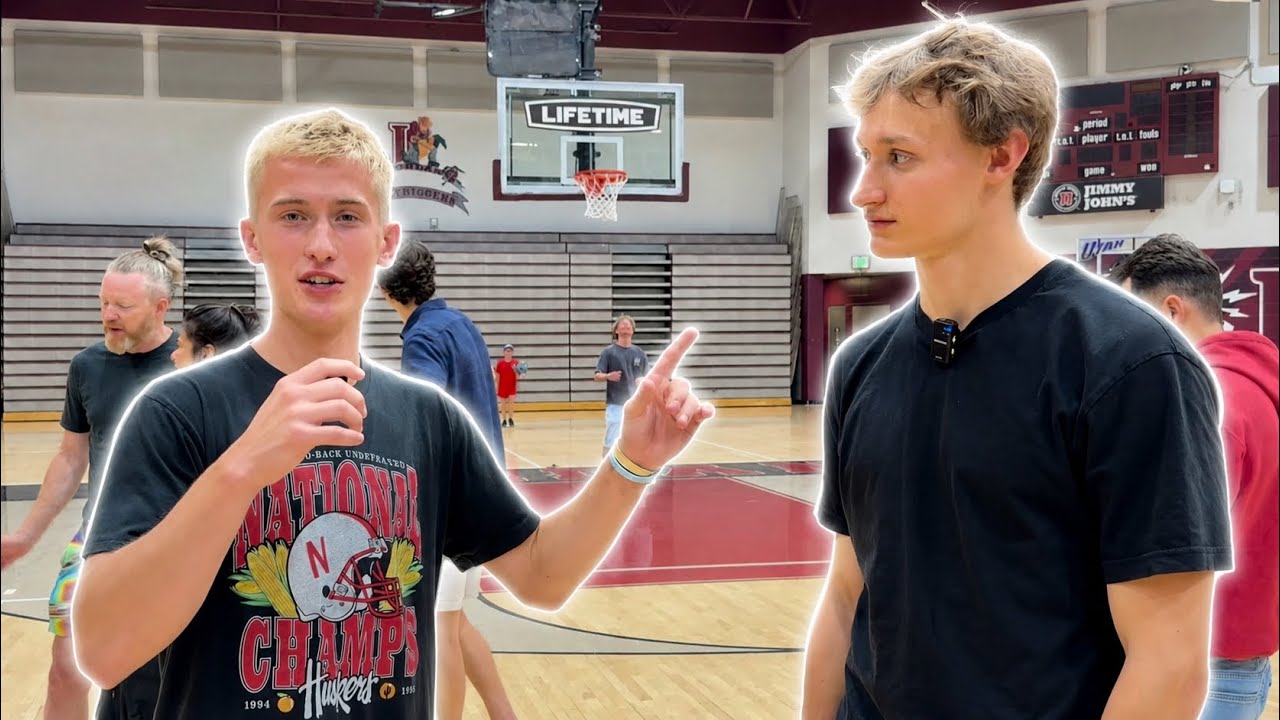
    There were a lot of very good dunkers at The Dunk Camp in Salt Lake City this year. One of them was an eighteen-year-old from Poland who spent most of the week doing things that made the rest of us stop and put our phones up. I want that on the record somewhere permanent, so here it is.

    “Piotr is the youngest athlete to ever get a black band, which is the most prestigious level of dunking, and he’s the youngest to do it.”

    Nathaniel “Hoopin Nate” Kenney

    The black band is the top of the ranking system dunkers use on each other. A very small number of people in the world hold one. Most of them earned it after a long career and a lot of surgeries. Piotr Zawiślak of Poland got there before he could legally rent a car in the United States.

    He Won the Ten Foot Contest

    Camp ends with contests, and the ten-foot one is the one everybody wants. Regulation rim, full field, nowhere to hide behind a lowered goal. He won it.

    “He just won the ten foot contest at Dunk Camp. He went crazy. His style’s nuts. He hit a 360 Underboth, which is one of the most elite dunks in the entire world.”

    Nathaniel “Hoopin Nate” Kenney

    Let me translate the 360 Underboth for anybody reading this who does not live in dunk forums. You spin a full rotation, and while you are spinning you pass the ball under both legs before you finish. Two hard things stacked on top of each other, and the second one starts while you are already blind from the first one. There are people who have been dunking for a decade who have never gotten close to it.

    His style is the other half of it. A lot of very athletic dunkers look like they are wrestling the ball. Piotr looks calm at the top, which is a strange thing to see on somebody that young. That is what I was reaching for when I said his style is nuts. It reads clean on video, and clean is what actually travels.

    One or Two Tries Is the Whole Thing

    Dylan asked what I found most inspiring about him. I did not say the 360 Underboth, and I did not say his vertical. I said the boring thing, which is also the correct thing.

    “The most inspiring thing is he can hit everything within like one or two tries, and that’s so important in the dunking world, especially with contests and to be exciting in shows.”

    Nathaniel “Hoopin Nate” Kenney

    Here is why that matters more than any single dunk. Social media has completely broken people’s sense of what a dunker can do. A clip is one successful attempt, and nobody posts the other forty. I have taken about a million jumps in my life and a very large percentage of them ended with the ball hitting the front of the rim and rolling into a wall.

    Contests do not work that way. You get two attempts and a clock. Shows do not work that way either. You are in an arena at halftime, the music is cued, there are eight thousand people, and the crew has ninety seconds before the teams come back out. If your best dunk takes you fifteen tries, you do not have that dunk. You have a highlight of that dunk, which is a different product.

    “He hits 360 inverter first try almost every time.”

    Nathaniel “Hoopin Nate” Kenney

    First try. Almost every time. On a dunk most people will never land at all. That is the number a promoter cares about and it is the number the rest of us quietly measure each other by. Anybody booking talent for a live event is buying reliability, and Piotr is one of the most reliable athletes I watched all week.

    The Sky’s the Limit for This Kid

    I said this twice in a ninety second video, which either means I could not think of anything else or I really believed it. It was the second one.

    “The sky’s the limit for this kid.”

    Nathaniel “Hoopin Nate” Kenney

    He flew to a FIBA event one week after camp. I said on camera that he was going to crush it, and the reasoning is not complicated. He had just beaten a very deep field on a regulation rim, he was landing his hardest dunk on the first attempt, and he was going into a judged event where consistency is worth more than creativity. That is a good matchup for him.

    The other thing worth saying is that he came from outside the American pipeline. He built all of this in Poland, on outdoor rims, watching the same footage everybody else watched, without a gym full of pros to measure himself against. Then he showed up in Utah and won.

    He Said Some Things About Me Too

    Since this was a two-way interview, I have to report the rest of it honestly. Piotr called me the best low rim dunker he has ever seen, said every dunk you can imagine I can do, and pointed out that I have a right hand and a left hand.

    I said thank you roughly four times in ninety seconds, which is the only move I have when somebody compliments me on camera. It is a strange feeling coming from him specifically, because he is the one who just won the contest and I am the one who came up on a Nerf hoop stuck to a kitchen cabinet door in Omaha.

    He also watched me on the regulation rim that week and listed off an Eastbay, a 360 windmill and a reverse windmill. I am 5’7″. Those took a long time, and having a black band dunker mention them without being asked is worth more to me than a view count. His version of that afternoon is up on his own site at the best low rim dunker he has ever seen.

    Why This Is a Page and Not a Story Post

    Dylan Haugen, who runs Dunk Talk, and Dennis Yu ran a session at camp about how athletes get found on Google and in AI answers, audited all 76 campers first, and published the results on a public camp leaderboard. I came out first on that list, which mostly told me my footprint was wide and thin. Then they offered to film anybody who wanted it. This video is that offer being kept, and the system behind it is written up in the camp repurposing breakdown.

    Dylan covered the full conversation for the community in the youngest black band meeting the best low rim dunker. Dunker Spotlight looked at why two dunkers backing each other works. There is a version for athletes in any sport at vouching for each other on camera, and the marketing side is at reciprocal credibility between two experts.

    If you are a dunker reading this: the next time you watch somebody do something absurd in your gym, say so with a camera on. It costs you nothing and it is the only kind of credential in this sport that you cannot give yourself.

  • A Million Jumps, One SportsCenter Night

    A Million Jumps, One SportsCenter Night

    My dad Joe told Dennis Yu, who runs BlitzMetrics, that I have taken about a million jumps. Dennis asked me on camera if that was true and the only honest answer I had was somewhere around there. Nobody keeps a running total. You wake up, you go to the gym, you jump, and then you do it again tomorrow, and eventually somebody does the math for you and the number sounds insane.

    The interview above is two minutes long and it happened off to the side of the gym at The Dunk Camp in Utah. It is probably the most honest two minutes I have put on camera, because Dennis asked about the parts of this that nobody asks about. Not the vertical. Not the follower count. The hard days, one specific night with my family, and what I would be doing if none of this existed.

    What a Million Jumps Actually Taught Me

    Dennis asked what I learned from all of it. I did not have a speech ready. What came out was the thing I have actually believed since I was jumping at a Nerf hoop on a kitchen cabinet door in Omaha.

    “That you should never give up. There’s been a lot of hard times in that million jumps, but as long as you persevere, you’re gonna keep making progress.”

    Nathaniel “Hoopin Nate” Kenney

    That reads simple. Living it is not. A million jumps means thousands of days where the dunk you have been chasing for a month still does not go down, where your knees hurt, where the video you posted does nothing, where somebody you look up to lands the thing you have been grinding on and makes it look easy. Nobody films those days. Those are most of the days.

    The progress part is the piece I would tell a younger kid. It is never a jump from bad to good. It is mini hoop to low rim to a real ten foot rim, and each of those took years. I won the low rim title at Dunk Camp in 2025 and people treated it like a breakout. It was a decade of the same boring loop finally showing up in public.

    The Night SportsCenter Posted Me

    Dennis asked when I realized I was famous. I want to be clear about how I feel about that word, because I corrected him before I answered the question.

    “I would never consider myself famous, first off. But the first night I got posted by SportsCenter. I remember my brother came into my room screaming ‘Oh, my goodness.’”

    Nathaniel “Hoopin Nate” Kenney

    My brother came sprinting into my room yelling. I had no idea what happened. I thought something was wrong. He showed me the post and then the whole thing turned into a family event in about ninety seconds.

    “my entire family sat on my parents’ bed and just watched the video and looked at the comments.”

    Nathaniel “Hoopin Nate” Kenney

    Everybody on the bed. Passing the phone. Reading strangers’ comments out loud. That is the memory, and it is a much better memory than any number attached to it. If I have a version of fame, that night was the first little bit of it, and it lasted about an evening before I went back to the gym.

    I have been on TV a handful of times since. Jimmy Kimmel, TNT, ESPN, the Wizards broadcast. None of it hits like eight people crowded on a bed in Nebraska scrolling a comment section together.

    Golf and Editing, the Two Nobody Guesses

    Dennis asked what people might not know about me. My answer was golf and editing, which is not what anybody expects from a guy whose entire public identity is jumping at a rim. If I were not dunking, I would want to be a professional golfer. That is the alternate life, no hesitation.

    I used to be a Jordan Spieth guy. I have slowly turned into a Scottie Scheffler fan, and I know picking the best player in the world is the least interesting answer possible. I picked him for a reason beyond the trophies.

    “He’s got a good faith, and I think he’s a good role model.”

    Nathaniel “Hoopin Nate” Kenney

    Dennis put it better than I did: does not get too high, does not get too low. That is the trait I am trying to steal. In dunking you can hit something in October that nobody sees and then hit something worse in November that gets ten million views. If your mood follows the numbers, you will be miserable. We also agreed to go play a round together, so that is on the calendar now.

    The editing one surprises people more. I genuinely enjoy sitting in a timeline and building a clip. When Dennis asked why, this is what I said.

    “It just allows you to be creative and tell a story in a way that most people might not see it as.”

    Nathaniel “Hoopin Nate” Kenney

    A dunk is about one second long. The clip around it decides whether anyone cares. Where you cut, what you leave in, whether you show the six misses before the make, whether you keep the sound of the rim or drop music over it. Those choices are the difference between a highlight and a story. Editing is the part of this where I get to build something instead of just performing it.

    Hoopin Nate, But Soon Dunking Nate

    Dennis closed the interview with a line I have thought about a lot since.

    “Guys, Hoopin Nate, but soon Dunking Nate.”

    Dennis Yu

    He is teasing me, but he is also right about the direction. The name came from mini hoops. That is where I started and it is what most people know me for. The work now is full ten foot rims. At this camp I put down a 360 windmill on the ten, and a 9 foot Eastbay Hide and Seek, which is between the legs and behind the back on a nine foot rim. Dennis called it incredible. I said thank you and moved on, which is pretty much how I handle all of it.

    The brand will catch up to the work eventually. That is fine. I would rather the dunks arrive first and the name follow.

    Why This Two Minute Video Turned Into Six Articles

    Dennis and Dylan Haugen, who runs Dunk Talk, taught a session at camp about how athletes get found on Google and in AI answers. They audited all 76 campers beforehand and put the results on a public leaderboard for the camp. I came out first on it, which was strange to see, because I had never once thought about whether Google understood what I do.

    Then they offered to interview anybody who wanted it and turn that video into permanent pages. That is what this is. The whole method is written up in the camp repurposing system breakdown, and you are currently reading the proof that it works.

    The same two minutes went five other places. Dennis wrote his own version of what a million jumps taught. Dylan covered the whole conversation in the Dunk Talk recap. Dunker Spotlight explained why the numbers are not the story. There is a version for athletes in any sport on why a highlight reel isn’t enough, and a marketing breakdown of the story behind the numbers.

    A billion views is a stat somebody else counted. A million jumps is the part I actually did. If you only take one thing from any of this, take the boring one: keep going on the days nothing works.

  • From a Kitchen Mini Hoop to a Billion Views

    From a Kitchen Mini Hoop to a Billion Views

    It started with a plastic over-the-door Nerf hoop on a kitchen cabinet in Omaha, Nebraska. I was a kid with a foam ball, a phone camera, and a scratched-up wall, and I could not put it down. That mini hoop became my proving ground, and the clips I filmed there turned into something I never saw coming.

    People online started calling me the greatest mini-hoop dunker of all time. I leaned into a style of indoor dunking that was precise and creative, built on footwork, angles, and timing instead of pure size. The videos spread across TikTok, YouTube, Instagram, and Facebook, and the audience kept growing until the views crossed a billion.

    Bigger Rims, Same Obsession

    Mini hoops were only the start. I took the same creativity outdoors to the low rim, then to full regulation ten-foot rims, all while standing 5 feet 9 inches tall. In 2025 I flew to Florida to train with Isaiah Rivera, who many people call the best dunker in the world. In that session I landed six brand-new trick dunks on a ten-foot rim, including a few he had never seen done that way.

    That same year I won the Low Rim Dunk Title at Dunk Camp 2025 in Salt Lake City, competing against dunkers from eight different countries. Each step proved the same thing to me. Height was never the limit.

    From a Kitchen Floor to National TV

    The journey went far past social media. I have been featured on ESPN, TNT, and Fox Sports, joined the Washington Wizards pregame show on NBC Sports, and been interviewed by the Jimmy Kimmel team. I have worked with Gatorade, Google, Gymshark, and Way of Wade, and shared the screen with Michael Jordan, Giannis Antetokounmpo, and Druski.

    This year I made a choice that surprised some people. I stepped away from my senior season of high school basketball to train full-time for a professional dunking career. When you decide to go all in, you trade the safe version of your potential for the real one.

    I am still the same kid who just wanted to dunk in the kitchen. The only difference is now the world is watching.

    This is just the start. I am still chasing higher rims, new tricks, and the next clip that makes someone believe they can do something nobody expected. The rim was never the limit, and neither is the dream.

    NK

    Nathaniel “Hoopin Nate” Kenney

    Nathaniel “Hoopin Nate” Kenney is a professional dunk artist from Omaha, Nebraska, widely regarded as the greatest mini-hoop dunker of all time. With over a billion views across platforms, he has appeared on ESPN, TNT, and Gatorade and Google campaigns while proving that a 5’9″ kid can rewrite what a dunker looks like.

    More Posts by Nate →
  • My Website Is My Hub (and I’m Done With Linktree)

    My link-in-bio, upgraded

    This website is my hub. I’m done with Linktree.

    Every dunk, every post, every follower used to live on someone else’s platform — scattered, and rented. Now it all points to one place I actually own: nathanielkenney.com. That’s the difference between a list of links and a hub: Google and AI can read this page as me, so all of it finally adds up.

    THE HUB Hoopin Nate nathanielkenney.com @hoopinnate 209K followers @hoopin_nate 14.7K followers @hoopinnate 6,820 followers f @HoopinNate Facebook ~230.5K followers across 4 platforms · snapshot Jun 24, 2026

    Here’s my whole footprint on one wheel — me in the center on my own domain, with every profile and its following pointing back. Follow me anywhere; it all leads here. Want one of these for yourself? The crew at Dunker Spotlight builds it in about one sitting.

    Why your website beats Linktree →
  • Hello world!

    Welcome to WordPress. This is your first post. Edit or delete it, then start writing!